Moving to Canada can open the door to new opportunities. However, the immigration process often involves forms, documents, deadlines, and different requirements.
Many individuals and families need help understanding these steps. For example, some want to sponsor a spouse, while others hope to bring their parents to Canada for an extended visit. Meanwhile, students and skilled workers may need guidance on their own immigration options.
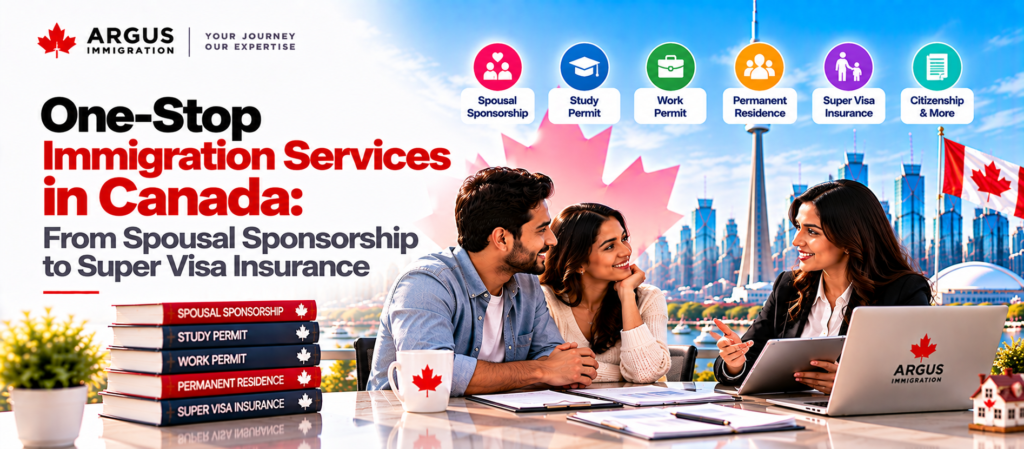
One-stop immigration services bring several types of support together. Depending on the provider, these services may include application guidance, document reviews, family sponsorship, and help understanding Super Visa insurance requirements.
In this guide, we explain Canada’s main immigration pathways and the support you may need. We’ll also share practical tips for choosing an immigration consultant and preparing your application.
Understanding Canada’s Immigration System
Canada offers several immigration pathways for people with different backgrounds and goals. Immigration, Refugees and Citizenship Canada (IRCC) manages many federal programs and applications.
Your options depend on factors such as your education, work experience, family relationships, and immigration status.
Some common pathways include:
- Express Entry: For eligible skilled workers.
- Family sponsorship: For eligible spouses, partners, parents, grandparents, and other family members under specific programs.
- Provincial Nominee Programs (PNPs): For eligible applicants nominated by a province or territory.
- Study permits: For eligible international students.
- Work permits: For eligible foreign workers.
- Super Visas: For eligible parents and grandparents of Canadian citizens or permanent residents.
Each pathway has different rules. Therefore, you should identify the option that matches your circumstances before preparing an application.
An immigration consultant can help you understand these requirements and organize your documents. However, no consultant can guarantee approval.
Spousal Sponsorship: Reuniting Families in Canada
Spousal sponsorship allows eligible Canadian citizens and permanent residents to sponsor their spouse or partner for permanent residence.
This pathway helps families build their lives together in Canada. However, both the sponsor and the sponsored person must meet the applicable requirements.
Who Can Qualify for Spousal Sponsorship?
Canadian immigration rules recognize several types of relationships.
- Spouse: A person legally married to the sponsor.
- Common-law partner: A partner who has lived with the sponsor in a marriage-like relationship for at least 12 consecutive months.
- Conjugal partner: A partner in a qualifying committed relationship who cannot marry or live together because of certain circumstances beyond their control.
The requirements differ by relationship type. Therefore, review the rules that apply to your situation.
What Are the Main Sponsorship Requirements?
Generally, the sponsor must be at least 18 years old and a Canadian citizen or permanent resident. The sponsor must also meet the relevant sponsorship conditions.
In addition, IRCC assesses the sponsored person’s admissibility and the genuineness of the relationship.
Applicants may need documents such as:
- Marriage certificates or other relationship evidence.
- Photos and records showing the history of the relationship.
- Proof of shared residence or financial responsibilities, where relevant.
- Identity documents and completed application forms.
- Additional supporting documents requested by IRCC.
The exact requirements depend on the application.
How Can One-Stop Services Help?
Preparing a spousal sponsorship application can take time. A qualified immigration professional can help you understand the requirements and organize your supporting evidence.
For example, professional support may include:
- Reviewing the application forms.
- Checking relationship documents for completeness.
- Explaining eligibility requirements.
- Identifying missing information.
- Helping you respond to requests from IRCC.
As a result, you can approach the process with a clearer understanding of the steps involved.
How Long Does Spousal Sponsorship Take?
Processing times vary according to the application type, location, and individual circumstances.
Therefore, avoid relying on a fixed estimate from an older article. Instead, check IRCC’s current processing-time information before making plans.
Family Sponsorship Beyond Spouses
Family sponsorship can also help eligible Canadians bring certain other family members to Canada.
For example, some programs allow Canadian citizens and permanent residents to sponsor parents, grandparents, or dependent children.
However, each category has its own eligibility rules and application process.
Sponsoring Parents and Grandparents
The Parents and Grandparents Program (PGP) offers a pathway to permanent residence for eligible parents and grandparents. However, the program has limited intake and specific eligibility requirements.
Consequently, not every interested sponsor can submit an application whenever they choose.
If you want to bring your parents or grandparents to Canada, check the latest IRCC announcements for program availability and application instructions.
When Is a Super Visa an Option?
A Super Visa may suit eligible parents and grandparents who want to visit family in Canada for extended periods.
Unlike permanent sponsorship, the Super Visa is a temporary resident visa. It does not grant permanent residence.
Nevertheless, it can offer families another way to spend more time together while they explore their long-term options.
Super Visa Insurance: What Families Need to Know
Super Visa applicants must meet specific medical insurance requirements. Therefore, insurance planning is an important part of preparing an application.
What Is Super Visa Insurance?
Super Visa insurance is private medical insurance that helps cover eligible healthcare expenses during a visitor’s stay in Canada.
Applicants must meet IRCC’s insurance requirements. These include minimum coverage, policy validity, and acceptable coverage for healthcare, hospitalization, and repatriation.
The policy must generally provide at least CAD $100,000 in coverage and remain valid for at least one year from the date of entry.
Because insurance rules can change, check the latest official requirements before purchasing a policy.
How Can You Choose a Suitable Policy?
Before buying insurance, compare the available options carefully.
Consider these factors:
- Coverage amount: Confirm that the policy meets the required minimum.
- Policy duration: Check that the coverage meets the applicable validity requirements.
- Medical coverage: Review the benefits and exclusions.
- Deductibles: Understand how much you may need to pay yourself.
- Payment terms: Check the payment schedule and any refund conditions.
Additionally, confirm that the insurer and policy meet the current IRCC requirements. A policy that does not satisfy these rules may not support your Super Visa application.
How Can Immigration Services Help?
An immigration service provider may help you understand which insurance documents your application needs. Some providers may also help you compare available policies through insurance partners.
However, immigration advice and insurance sales are different services. Confirm what the provider offers before engaging them.
You should also read the policy carefully and contact the insurer if you have questions about coverage or claims.
Other Services Offered by Immigration Consultants
One-stop immigration providers may offer support across several areas. The services available depend on the provider’s qualifications and business model.
Study Permit Applications
International students must meet the relevant study permit requirements before studying in Canada.
A consultant may help you understand the application process, review supporting documents, and identify requirements that apply to your situation.
However, admission to a Canadian institution does not automatically guarantee study permit approval.
Work Permits and LMIA Applications
Some foreign workers need an employer-supported work permit. Depending on the situation, the employer may also need a Labour Market Impact Assessment (LMIA).
The requirements vary by work permit category. Therefore, applicants and employers should confirm which process applies before submitting an application.
Permanent Residence and Citizenship
Eligible applicants may pursue permanent residence through programs such as Express Entry or a Provincial Nominee Program.
Canadian permanent residents may also apply for citizenship once they meet the applicable requirements.
Professional guidance can help applicants understand the documents, eligibility criteria, and steps involved in these processes.
Document Translation and Preparation
Immigration applications may require documents in English or French.
Applicants must follow IRCC’s rules for translations, affidavits, and supporting records. Depending on the document and circumstances, a certified translation or other supporting evidence may be necessary.
Always check the instructions for your specific application.
Settlement Support
Some providers also offer practical support for newcomers after they arrive in Canada.
For example, they may help clients explore:
- Housing resources.
- Job search services.
- Resume preparation.
- Local community organizations.
- Settlement and newcomer services.
These services can help newcomers understand their options as they adjust to life in Canada.
Benefits of Choosing a One-Stop Immigration Service
Working with one provider for related services may make your immigration journey easier to organize. However, the benefits depend on the provider’s actual services and experience.
1. Save Time Organizing Documents
Immigration applications often require several forms and supporting records.
A service provider can help you create a document checklist and organize the required information. As a result, you may find it easier to track your progress.
2. Reduce Avoidable Errors
Incomplete forms and inconsistent information can cause problems during processing.
An experienced professional can review your application and identify potential gaps before submission. Nevertheless, you remain responsible for providing truthful and accurate information.
3. Understand the Process More Clearly
Immigration rules can feel complicated, especially when you are unfamiliar with the system.
A consultant can explain the relevant steps, deadlines, and requirements in plain language. This guidance may help you make informed decisions.
4. Coordinate Related Services
Some applicants need more than one type of support.
For example, a family may need help understanding a Super Visa application and its medical insurance requirements. A provider offering both services may help coordinate the related tasks.
However, confirm which services the provider handles directly and which ones require a separate professional or insurer.
5. Understand the Costs in Advance
Immigration services may involve professional fees, government fees, and other expenses.
Before hiring a provider, ask for a written fee agreement. It should explain the services included, the payment terms, and any additional charges.
This step can help you compare providers and avoid unexpected costs.
How to Choose the Right Immigration Consultant in Canada
Choosing an immigration professional requires careful research. Use these steps to assess your options.
Check Their Credentials
If you plan to hire a Regulated Canadian Immigration Consultant (RCIC), verify their licence through the official College of Immigration and Citizenship Consultants (CICC) public register.
Lawyers and certain other authorized professionals may also provide Canadian immigration services. Confirm that the person you hire has the appropriate authorization.
Read Client Reviews Carefully
Online reviews can help you understand other clients’ experiences.
However, do not rely on reviews alone. Look for clear information about the provider’s services, communication, and fee structure.
Ask About Services and Fees
Before signing an agreement, ask what the provider will do for you.
Clarify the scope of work, expected communication, payment schedule, and any additional costs. Request a written agreement so you can review the terms.
Avoid Promises of Guaranteed Approval
No consultant can guarantee that IRCC will approve an application.
Be cautious if a provider promises guaranteed results, claims to have special influence over immigration officers, or pressures you to pay immediately.
Instead, choose a professional who explains the process honestly and discusses the risks that may affect your case.
Why Consider Argus Immigration Consultancy?
Managing immigration documents and deadlines can be challenging. Argus Immigration Consultancy helps clients explore Canadian immigration pathways and understand the steps involved.
Depending on your needs, you may wish to discuss family sponsorship, Super Visa applications, permanent residence, or other immigration services.
Before starting, explain your circumstances and ask which services are suitable for your case. You should also confirm the qualifications of the professional who will handle your application.
Clear communication and accurate documentation can help you prepare more confidently.
For further information, visit Argus Immigration Consultancy or contact the team through the official contact page.
Final Thoughts
Canada offers several immigration pathways for families, students, skilled workers, and visitors. However, each pathway comes with its own requirements.
Spousal sponsorship can help eligible couples reunite permanently. Meanwhile, the Super Visa offers eligible parents and grandparents an option for extended family visits. Other applicants may need help with study permits, work permits, or permanent residence.
The right support depends on your circumstances. Therefore, research the available options, prepare your documents carefully, and check current IRCC guidance before applying.
Looking for immigration guidance in Canada? Contact Argus Immigration Consultancy to discuss your situation and learn about the services that may suit your needs.
Frequently Asked Questions
1. What is the best way to immigrate to Canada?
There is no single pathway that suits everyone. Express Entry may suit eligible skilled workers, while family sponsorship, provincial nomination, study permits, and other pathways serve different needs.
Your best option depends on your qualifications, family situation, and immigration goals.
2. Do I need an immigration consultant to apply for Canadian permanent residence?
No. You can prepare and submit your own application if you understand the requirements.
However, some applicants choose professional help when they need support with eligibility, documentation, or complex circumstances.
3. How much does an immigration consultant cost in Canada?
Professional fees vary according to the provider, the type of application, and the amount of work involved.
Before hiring a consultant, request a written fee agreement. Also, ask whether government fees and other expenses are included.
4. Which immigration program is suitable for skilled workers?
Express Entry manages three economic immigration programs: the Federal Skilled Worker Program, Canadian Experience Class, and Federal Skilled Trades Program.
Provincial Nominee Programs may offer additional options. Check the requirements for each program before deciding which one fits your profile.
5. What documents are required for a Super Visa?
Applicants generally need a valid passport, an invitation from their child or grandchild in Canada, evidence that they meet the financial requirements, and proof of qualifying medical insurance.
Other documents may also apply. Therefore, follow the latest IRCC checklist for your circumstances.
6. How can I sponsor my spouse for Canadian permanent residence?
Eligible Canadian citizens and permanent residents may sponsor a spouse or qualifying partner if they meet the applicable requirements.
Applicants must provide relationship evidence and other required documents. The sponsor and the sponsored person must also meet the relevant eligibility conditions.
7. What is the difference between a Super Visa and a visitor visa?
A visitor visa generally supports temporary visits to Canada. A Super Visa is specifically for eligible parents and grandparents of Canadian citizens or permanent residents.
The Super Visa may allow longer stays per entry, subject to current rules. It also has specific financial and medical insurance requirements.
8. Can an immigrant start a business in Canada?
Eligible foreign nationals may explore business ownership and entrepreneur pathways. However, owning or investing in a Canadian business does not automatically grant a work permit or permanent residence.
Check the current federal and provincial requirements before investing.
9. How can I check whether an immigration consultant is licensed?
If the professional is an RCIC, search the official CICC public register to confirm their status.
You can also verify the credentials of lawyers and other authorized representatives through their relevant regulatory bodies.
10. What are personalized immigration consultation services?
Personalized immigration consultations assess an individual’s circumstances and goals.
Depending on the service, a professional may explain potential immigration pathways, document requirements, and application steps. The advice should reflect the client’s actual situation rather than a one-size-fits-all approach.