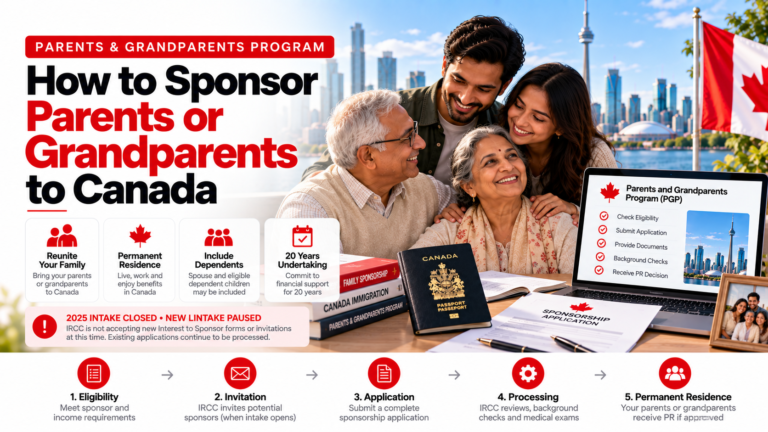
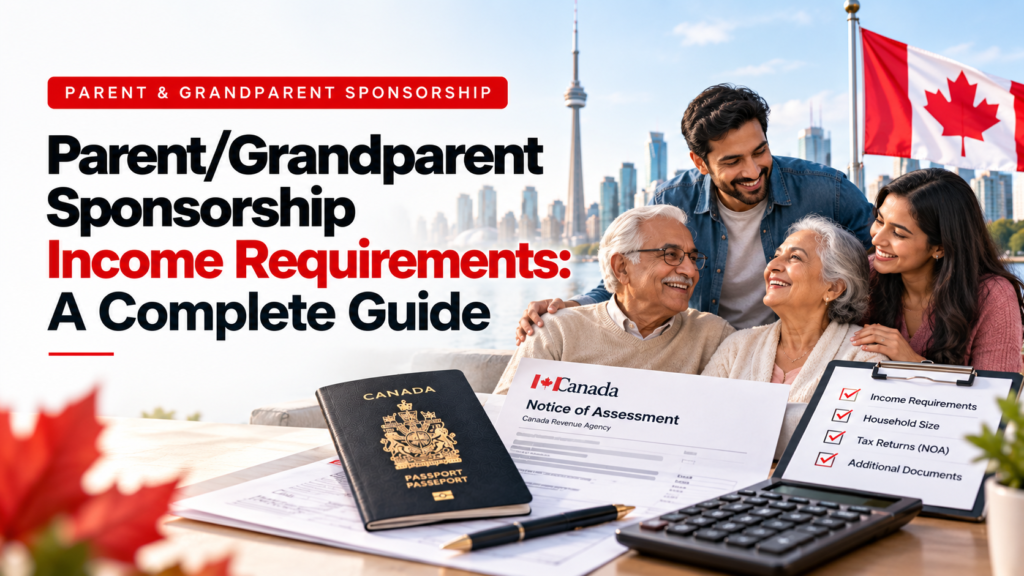
Bringing your parents or grandparents to Canada is an important goal for many Canadian families. The Parent and Grandparent Program (PGP) allows eligible Canadian citizens and permanent residents to sponsor their loved ones for permanent residence.
However, sponsors must meet specific income requirements before they can apply. These requirements are known as the Minimum Necessary Income (MNI).
In this guide, you’ll learn how the income requirements work, which documents you need, and how to prepare for the sponsorship process. You’ll also discover common mistakes to avoid and practical ways to improve your financial readiness.
What Is the Parent and Grandparent Sponsorship Program?
The Parent and Grandparent Program allows eligible Canadian citizens and permanent residents to sponsor their parents or grandparents for permanent residence in Canada.
As a result, families can live closer together and spend more time with one another. Sponsored parents and grandparents may also gain access to benefits available to permanent residents, subject to the applicable rules.
However, sponsors must accept financial responsibility for their family members. Outside Quebec, the sponsorship undertaking generally lasts 20 years. In Quebec, the undertaking period is generally 10 years.
Therefore, meeting the income requirements is an important part of the process.
Why Do Income Requirements Matter?
Immigration, Refugees and Citizenship Canada (IRCC) sets income requirements to help ensure that sponsors can support their parents or grandparents financially.
Sponsors must demonstrate that they meet the applicable income threshold. Otherwise, their application may not qualify.
For this reason, you should check your income eligibility before preparing your application. Planning ahead can also help you identify any financial gaps and avoid unnecessary delays.
Understanding the Minimum Necessary Income (MNI)
To sponsor your parents or grandparents, you generally need to meet the applicable Minimum Necessary Income for the required taxation years.
The income threshold depends mainly on two factors:
- Your family size: The number of people included in your sponsorship undertaking.
- The required income threshold: The minimum income set for your household size and applicable year.
IRCC uses specific income rules to assess eligibility. Therefore, always check the official requirements for the intake you are applying under.
How Is Your Household Size Calculated?
Your household size helps determine how much income you need to demonstrate.
Depending on your circumstances, it may include:
- You, the sponsor
- Your spouse or common-law partner, if applicable
- Your dependent children
- The parents or grandparents you plan to sponsor
- Other people covered by existing sponsorship undertakings or financial obligations
For example, imagine that you want to sponsor both parents. You live with your spouse and have two dependent children.
In this situation, your household size may be six people. However, you should confirm the calculation using IRCC’s current instructions and your complete family circumstances.
Minimum Necessary Income: An Example
The income required for sponsorship depends on your household size and the applicable income table.
The figures below are approximate examples from a 2024 reference table for applicants outside Quebec. They should not be treated as the current requirements for a new application.
| Household size | Approximate annual income |
|---|---|
| 2 people | $44,500+ |
| 3 people | $54,000+ |
| 4 people | $65,000+ |
| 5 people | $74,000+ |
| 6 people | $84,000+ |
| 7 people | $93,500+ |
For larger households, the required income generally increases with each additional person.
Important: IRCC updates income requirements over time. Before applying, check the official income table for the relevant taxation years and your specific circumstances.
Which Documents Prove Your Income?
IRCC assesses your financial eligibility using the documents and information required for your application.
Depending on your circumstances, you may need to provide or authorize access to:
- Notices of Assessment (NOAs): These show the income assessed by the Canada Revenue Agency (CRA).
- Tax information: Your tax records help demonstrate whether you meet the required income threshold.
- Employment documents: A job letter, pay stubs or T4 slips may help explain your employment and earnings when relevant.
- Additional financial documents: IRCC may request further information depending on your case.
However, a bank balance or property ownership does not automatically replace the required income evidence. You should follow IRCC’s specific rules about which income sources count toward eligibility.
Common Income Requirement Mistakes to Avoid
Even if you earn a good salary, mistakes can affect your sponsorship plans. Here are five issues to watch for.
1. Checking Only Your Most Recent Income
Many sponsors focus only on their latest annual income. However, the applicable rules may require income information for multiple taxation years.
Therefore, review every required year before deciding whether you qualify.
2. Calculating Your Household Size Incorrectly
Your household size affects the minimum income you must meet. Forgetting a dependent or an existing sponsorship obligation can lead to an incorrect calculation.
To avoid this problem, list everyone who must be included under IRCC’s rules before checking the income threshold.
3. Waiting Until the Last Minute
The PGP intake process may involve limited invitations or application windows. In addition, demand can exceed the number of places available.
For that reason, prepare your tax records early and monitor official announcements. This approach can help you respond when an opportunity becomes available.
4. Relying on Future Salary Increases
A future promotion or expected raise does not necessarily help you meet the income requirement for a past taxation year.
Instead, review your actual income records for the years IRCC requires. If you do not qualify yet, consider planning for a future opportunity.
5. Forgetting to File Your Taxes
Tax records play an important role in demonstrating your income.
If you have not filed your taxes, you may have difficulty providing the information required for your application. Therefore, keep your tax filings up to date and retain copies of your records.
How Can You Prepare for the Income Requirements?
A little preparation can make the process easier. Consider these practical steps:
- File your taxes on time. This helps keep your income records organized and available.
- Check whether a co-signer is eligible. If permitted under the applicable rules, your spouse or common-law partner may be able to co-sign and contribute qualifying income.
- Plan ahead. Review the income thresholds before you intend to apply.
- Organize your documents. Keep your NOAs and other relevant records in one place.
- Review the official requirements. Income rules and program instructions can change.
- Seek professional guidance when needed. An authorized immigration professional can help you understand your circumstances and identify potential issues.
By taking these steps early, you can make a more informed decision about when to pursue sponsorship.
How Can an Immigration Consultant Help?
Parent and Grandparent Program applications involve several financial and documentation requirements. As a result, it can be helpful to review your circumstances before applying.
At Argus Immigration, our team can help you:
- Calculate your household size based on your circumstances.
- Review the applicable income requirements.
- Examine your available income records and NOAs.
- Identify missing information or potential eligibility concerns.
- Understand the documents required for your application.
- Prepare for the next steps in the sponsorship process.
Every case is different. Therefore, professional guidance should be based on your actual financial records, family circumstances and the current IRCC rules.
Need help understanding your eligibility? Contact Argus Immigration to discuss your situation and explore your options.
Frequently Asked Questions
1. Can I apply if I do not meet the income requirements?
You must meet the applicable income requirements to qualify as a sponsor. If you do not qualify now, you may be able to plan for a future opportunity. Check the current program rules before making a decision.
2. Can my spouse or common-law partner co-sign the application?
Yes, an eligible spouse or common-law partner may be able to co-sign the sponsorship undertaking. Their qualifying income may then be considered under the applicable rules.
However, co-signing comes with responsibilities. Review the requirements carefully before proceeding.
3. Can I use my savings or property to meet the income requirement?
Savings and property do not automatically replace the income evidence required under the PGP rules. IRCC determines which income sources can count toward eligibility.
Therefore, check the current instructions rather than relying on your total assets alone.
4. How long must I support my parents or grandparents?
Outside Quebec, the sponsorship undertaking generally lasts 20 years. In Quebec, it generally lasts 10 years.
During this period, the sponsor must meet the obligations set out in the undertaking. Make sure you understand these responsibilities before signing.
5. When does IRCC open the Parent and Grandparent Program?
The intake process and invitation arrangements can change from year to year. IRCC may use invitations to apply rather than accepting applications from everyone who wishes to sponsor a parent or grandparent.
For this reason, check the official IRCC website for the latest announcements and instructions.
Final Thoughts
The Minimum Necessary Income is an important part of the Parent and Grandparent Sponsorship Program. Before applying, make sure you understand the income threshold, household size rules and required financial documents.
Start by reviewing your tax records and checking the latest IRCC instructions. Then, prepare a realistic plan if you need more time to qualify.
If you are unsure about your eligibility, contact Argus Immigration to discuss your circumstances and understand your next steps.
With careful preparation and accurate information, you can make more informed decisions about sponsoring your parents or grandparents to Canada.